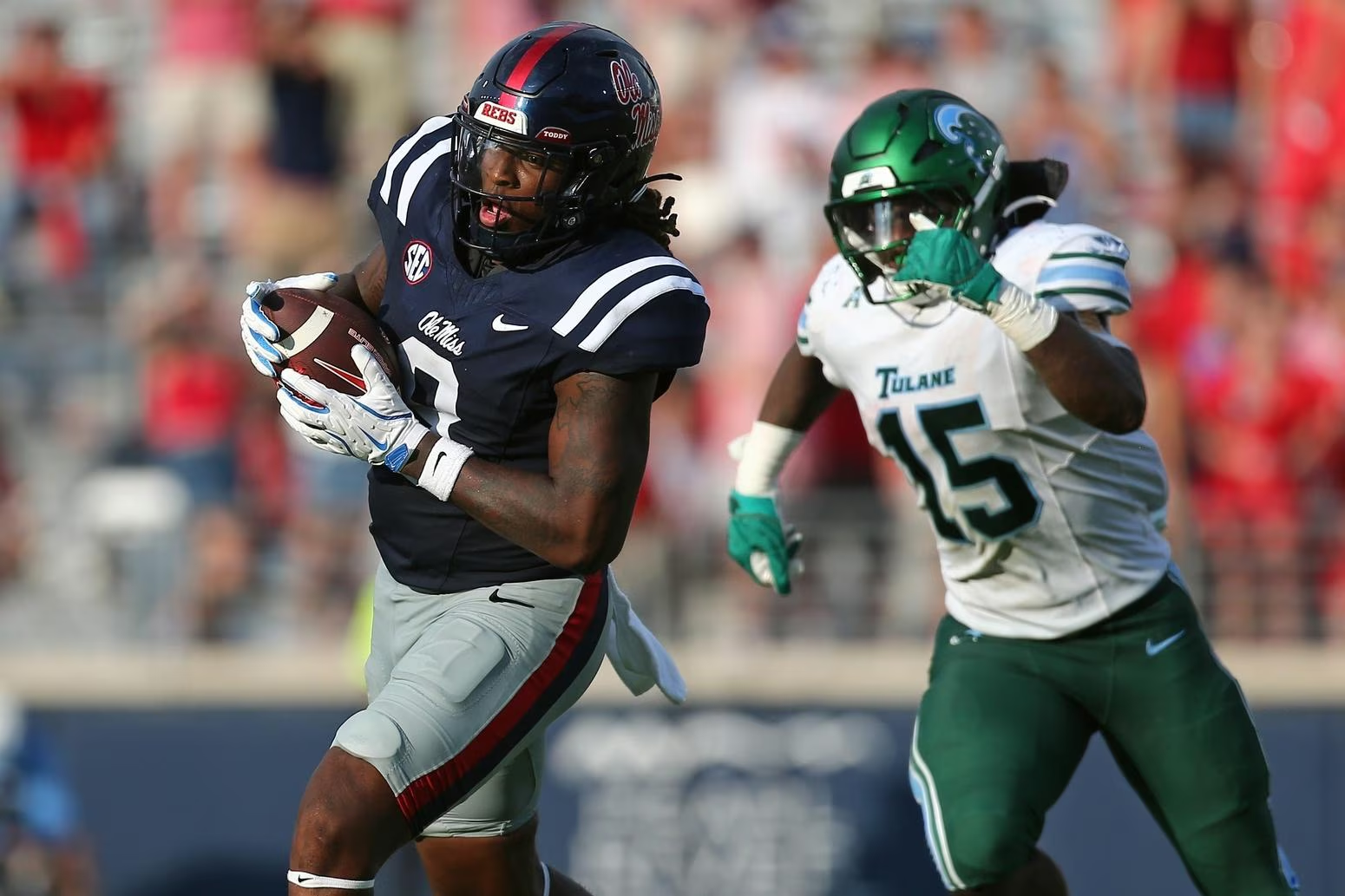
The College Football Playoff opens a new chapter Saturday afternoon with a familiar script and unfamiliar stakes, as No. 6 Ole Miss hosts No. 11 Tulane in a first-round matchup at Vaught-Hemingway Stadium.
It is a rare on-campus playoff game and an even rarer rematch for the Rebels. Ole Miss already defeated Tulane 45–10 in Oxford on Sept. 20, a result that looms over everything from strategy to psychology as the teams meet again with a spot in the CFP quarterfinals on the line.
Both programs are making their first appearance in the playoff, adding another layer of uncertainty to a game that already carries contrasting pressures. Tulane arrives as the American Athletic Conference champion at 11–2, fresh off a 34–21 win over North Texas in the league title game. Ole Miss enters at 11–1, seeded sixth and hosting, but navigating a sudden coaching transition just weeks before the postseason.
For Tulane, the path is straightforward but narrow. The Green Wave must turn the rematch into a fundamentally different game than the first meeting, when Ole Miss seized control early and never let go. Jon Sumrall’s team is built on an aggressive posture, and that approach is likely amplified on the road against an opponent that has already shown it can create separation.
Ole Miss, meanwhile, leans on proof rather than projection. The Rebels’ most direct résumé marker in this matchup is the earlier head-to-head win, executed on this same field. That result establishes a clear baseline — but it also creates expectations that now must be met amid off-field change.
The coaching storyline sits at the center of the rematch. Lane Kiffin’s departure to LSU elevated Pete Golding into the head coaching role, placing continuity and emotional management under a national microscope. Ole Miss has already demonstrated a winning plan against Tulane; the challenge now is executing it again while maintaining steadiness through the transition.
On the field, the primary tension is whether Tulane can withstand the early phase that buried it in September. Ole Miss’ ability to break games open versus Tulane’s need to stabilize and extend the contest defines the opening stretch. If the Rebels establish the same rhythm they did in the first meeting, the upset margin narrows quickly. If Tulane holds firm early, the pressure flips, forcing Ole Miss to close a tighter game under playoff lights.
A secondary swing factor lies in disruption versus control. Tulane’s upset formula depends on volatility — pressure looks, aggressive decisions and the willingness to chase leverage. Ole Miss counters with the need for clean execution and situational control, particularly given the new head coach dynamic. In playoff games, chaos can compress margins, but instability can also magnify mistakes.
Both staffs are navigating new territory. It is the first CFP game for each program, removing any experiential edge. Tulane is expected to lean into aggression; Ole Miss may prioritize steadiness, especially early, to prevent the game from becoming erratic.
From a scouting perspective, the matchup places a spotlight on Ole Miss defensive tackle Zxavian Harris and Tulane edge rusher Santana Hopper, each evaluated on how they impact a high-stakes setting. Ole Miss quarterback Trinidad Chambliss also remains central to the season’s narrative following his role in the earlier meeting.
Late-game pressure is likely concentrated in the middle eight minutes bridging halftime into the fourth quarter. If Tulane remains within striking distance, the closing responsibility shifts sharply to Ole Miss amid a louder-than-normal backdrop. If the Rebels carry a cushion, the rematch storyline fades into confirmation.
Ultimately, the clearest evidence favors Ole Miss. The Rebels already executed and pulled away against Tulane in this exact setting. Saturday’s challenge is not discovering whether they can do it — it is proving they still can, under different circumstances, when the stakes are no longer theoretical.
About the Author


Dalton Tinklenberg is the Founder and Media Director of The Scouting Depot, where he leads comprehensive coverage of college and professional football. He is an active member of some of the most respected organizations in sports journalism, including the Football Writers Association of America (FWAA), Pro Football Writers of America (PFWA), Maxwell Football Club, Online News Association (ONA), National Football Foundation (NFF), and the Associated Press Sports Editors (APSE).
Before launching The Scouting Depot, Dalton worked with Blue HQ Media, where he covered major sporting events such as the Indianapolis 500, the College Football Playoff, and the Pro Football Hall of Fame Induction Ceremony.
Through his professional affiliations and on-the-ground experience, Dalton combines deep knowledge of the game with recognized standards of storytelling, editorial excellence, and authenticity in sports coverage.


